

The stunning backcountry of the Diné reservation
For the first time in his short academic career, my third grader has been highly engaged at school. His Indigenous teacher has been teaching his class about Indigenous history and culture through their integrated studies. His engagement in learning about this rich culture has been infectious, so for spring break this year we embarked on a nine-day adventure to experience as much as we could about the Southwest Tribes he’s been studying.
First, we embarked on the not-much-traveled Hopi Arts Trail in the first, second, and third mesas of the Hopi nation in Arizona. Old and weathered signs were posted at the entrance to each village discouraging non-Tribal members from entering the villages from the main highway and that no photos are to be taken while visiting the mesas. Inside the art galleries, which were largely converted rooms of artists’ homes, we met warm yet reserved people who were willing to spend their afternoon sharing a bit about their craft, local history, and traditions after hearing that Brice was learning of their Tribe from his teacher.
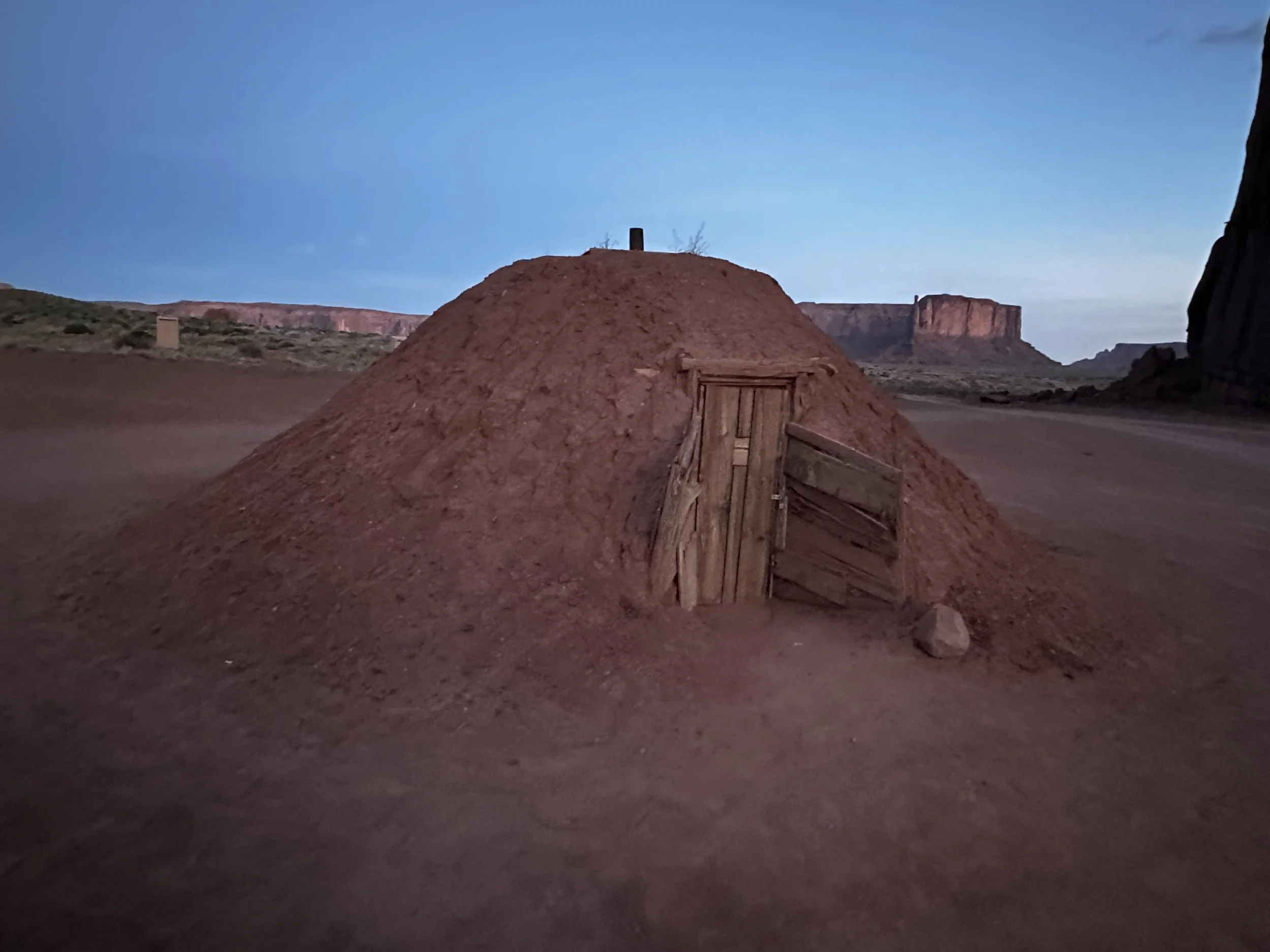
Our Hogan
The Hopi are known for their sacred Tithu carvings, which teach children about their spiritual beings. While the artist was describing the significance behind each carving, they also described the harm that the westernization of the carvings (called “Kachina dolls” in Western society) has caused. Western cultures have deeply misunderstood and misappropriated the carvings, which hold deep spiritual meaning on topics such as healing, fertility, and wisdom, in an evil or haunting way (such as with the popular 1970s movies). Self-described by those we met as a private and quiet tribe, this motivated the signs we saw upon our entry to the mesas, and only recently have some within the tribe started to open their doors to the western world again—though doing so comes with some risk for their Tribe. They also talked about their connections to each other, their ancestors, their ceremonies, and to the earth. They shared a bit about their ancient ways of generational farming in which the whole community comes together in specific ceremonies, with Tithu, to care for the fields of corn, squash, and beans.
As I left the mesas, staring at miles of undeveloped wild ground that most would consider inhospitable, I left with a sense of connection I haven’t felt when visiting other cities around the world. My mind was ruminating on the artists’ feeling of “enough” and “care” and how different that felt than when I socialize at home.
We then made our way to the Navajo Nation in Monument Valley where we would stay overnight in a Hogan, a traditional home of the Navajo people. We parked our car at the entrance to the 17-mile loop and our Navajo guide took us deep into the backcountry of the reservation, a privilege few experience. Along the way he educated us on everything we needed to know for our time on the reservation, most importantly the fact that “Navajo” was the term given to them by the Spanish, and that they are Diné. Our Hogan was tucked between two ancient monuments whose vibrant colors changed with the moving sun, in the center of a tiny community. As we approached, the Hogan was barely distinguishable from the surrounding dirt. Inside we were met with a stark dichotomy: beautiful architecture crafted by long-gone generations and only the most basic of necessities—a stove for warmth, mats for sleeping, and some containers of water. No electricity, no running water.
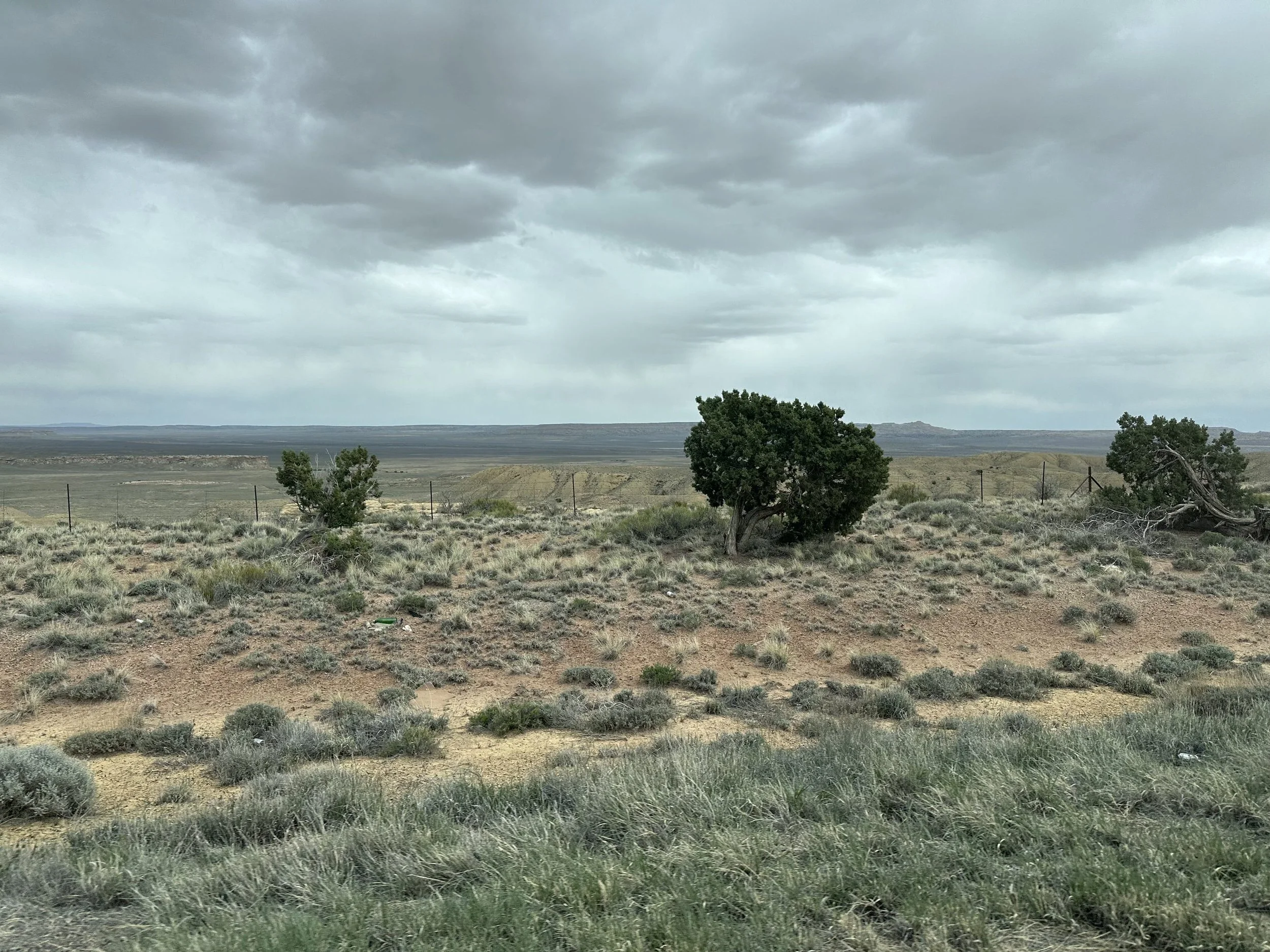
View coming out of the Hopi mesas
The evening was spent around the fire, exchanging stories. Our host painfully yet genuinely shared his trauma from being forced to attend an American Indian boarding school in the 1960s, being punished for displaying or practicing anything Diné, and being forced to assimilate into white culture. Most within our host community had endured similar. Yet, the tone subtly shifted as the evening continued. We heard about a community coming together after the boarding schools were closed, stories about how they revived and continued their traditions, of shaman healing, and of a deep connection with Mother Earth. The threads through the stories were community, respect, and the connectedness of nature. By our standards, this community has little, but sitting in the red dirt looking up at a dark sky you can only see in a few places on the planet, to me, it felt like they had everything that matters. We spent hours in silent reflection (practically a miracle with eight- and eleven-year-old boys), mesmerized by the shifting night sky—shooting stars and never-before-seen (by us!) constellations that are usually masked by light pollution.

Dawn is a sacred time for the Diné
Until recently, the energy efficiency industry has primarily served middle- to upper-class white communities. As the industry shifts to more equitably serve all, there is so much dialogue and thought around how to serve “historically underserved” communities, making the assumption they want to be served by our programs. Since joining Encolor, my colleague, Rachel Dortin, has espoused the importance of connecting with people by showing up in their spaces prepared to genuinely listen. Our training’s community agreements include a statement about “no fixing, no saving,” meaning we are not here to fix people, nor to save them. And while I had listened in the past, there is a huge difference between hearing and experiencing.
It sounds cliché, but my time with the Hopi and Diné people was truly transformational. I now wonder if, as an industry, we’re asking the wrong questions. From the outside, the Hopi and Diné villages we briefly encountered would appear to be in most need of energy efficiency services, but they do not hold our same priorities, needs, or wants. Honestly, I now believe they are doing a lot of things right, specifically holding community and connection with nature above all else. Programs are trying different methods for raising awareness and providing education, giving fair compensation, listening, and accepting feedback. But it isn’t until we truly change our programs and ways of doing things to actually fit within another group’s culture and traditions that we will have the meaningful impact we seek in the way they want.
And for me, it wasn’t until I sat in the dirt, surrounded by wilderness, and listened with a genuine interest to someone who has experienced a radically different life than myself that “it” clicked—without a connection to people, nothing else really matters. This is the sentiment I will carry forward in my future work with Encolor.